


.png)
EV Charger Installation Edmonton Homeowners Trust
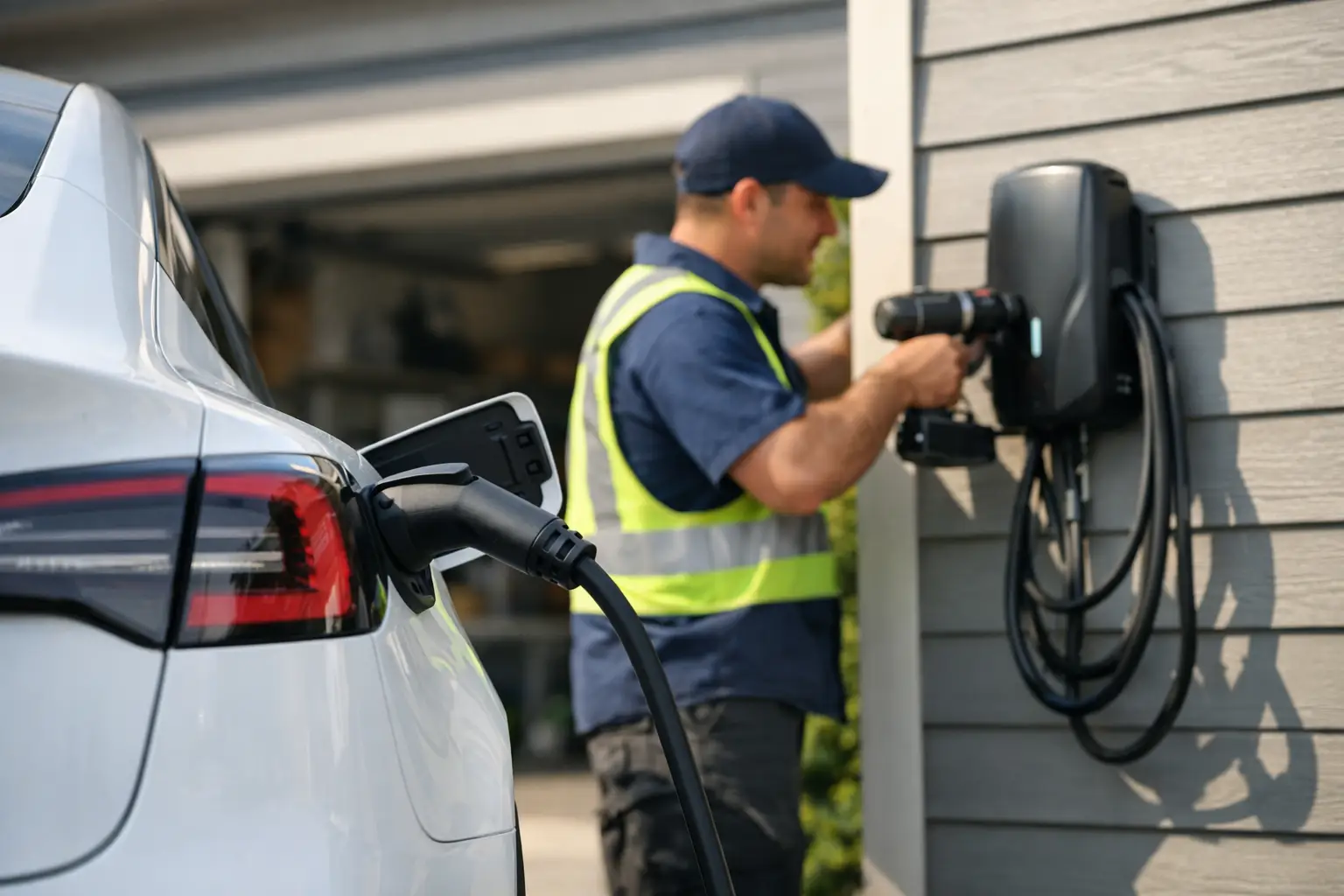
Getting home charging right the first time saves a lot of frustration later. In Edmonton, where winter is hard on batteries and daily driving routines matter, ev charger installation Edmonton homeowners choose should be safe, code-compliant, and sized for how they actually use their vehicle.
A charger that looks fine on paper can still be the wrong fit for your home. The real question is not just whether you can install one. It is whether your panel can handle it, where it should go, how fast you need it to charge, and whether the work is being done to current electrical code.
Why EV charger installation in Edmonton needs a local approach
Edmonton homes are not all built the same, and that affects the installation more than many people expect. A newer garage with extra panel capacity is one thing. An older home with a full panel, detached garage, or long wiring run is another.
Cold weather matters too. EV drivers in Alberta often want dependable overnight charging because range can drop in winter and public charging is not always the most convenient backup. That makes home charging less of a luxury and more of a practical part of owning the vehicle.
A local electrician understands the common layouts, permit requirements, and service conditions that come with Edmonton properties. That matters when the goal is a setup that works every day, not one that causes nuisance breaker trips or leaves you waiting on upgrades you did not plan for.
Level 1 or Level 2: what most properties actually need
For most people, Level 2 is the right long-term choice. Level 1 charging uses a standard outlet and may be enough if you drive short distances, have lots of time to charge, and do not mind slower recovery. It is the simplest option, but it can feel limiting fast, especially in winter.
Level 2 charging uses a 240-volt circuit and delivers much faster charging. For busy households, commuters, and anyone who wants their vehicle ready by morning, this is usually the better setup. It gives you more flexibility and reduces dependence on public stations.
That said, faster is not always better if your panel does not have room or if your driving habits are modest. Some homes need load management, a panel upgrade, or a thoughtful charger size instead of the highest available amperage. The best answer depends on the vehicle, the home, and how the property is used.
What happens during EV charger installation Edmonton property owners book
A proper installation starts with an assessment, not a guess. The electrician should look at your existing panel, available capacity, the location of the vehicle, the garage or parking layout, and the distance between the panel and charger location.
From there, the scope becomes clearer. Some projects are straightforward and only need a dedicated 240-volt circuit, breaker, wiring, and charger mounting. Others involve permit work, panel upgrades, trenching to a detached garage, or adjustments to support code-compliant placement and safe cable use.
There is also a decision between a hardwired charger and a plug-in style unit. Hardwired chargers are often preferred for durability and a cleaner finished result. Plug-in setups can offer flexibility, but they still need the right receptacle, proper circuit sizing, and safe installation practices.
The final step is testing and verification. The charger should be installed securely, labelled properly where required, and checked to confirm it is operating as intended without overloading the system.
The panel capacity question comes up for a reason
One of the biggest issues in home EV charging is not the charger itself. It is whether the electrical service can support it. Many homeowners assume they can simply add a charger because there is physical space in the panel. That is not the same as having electrical capacity available.
Load calculations matter. If your home already has major electrical demands like air conditioning, electric heat, a hot tub, or a secondary suite, the available capacity may be tighter than it looks. In that case, the installation might require a panel upgrade or a load management solution.
Neither option is automatically bad. A panel upgrade can improve the home for future electrical needs, especially if you are planning renovations or moving toward more electrified appliances. Load management can sometimes avoid a larger upgrade by controlling how power is used. The right path depends on the property and your budget.
Installation cost depends on more than the charger
When people ask about cost, they usually mean the whole job, not just the charging unit. That is the right way to think about it. The charger is only one piece.
The final price can change based on the panel condition, circuit length, charger amperage, garage finish, wall access, permit needs, and whether the work is in an attached or detached garage. A simple installation near the panel will cost less than a project that needs a service upgrade or a long run underground.
This is why broad online price ranges only tell part of the story. They can be useful for general expectations, but they do not account for the real conditions of your home or building. A site-specific quote is what gives you a dependable number.
Residential and commercial needs are not the same
For homeowners, the main concern is usually convenience, safety, and making sure the charger fits everyday routines. One vehicle, one parking location, and overnight charging are often the focus.
For commercial properties, the planning can be more involved. A business may be installing chargers for fleet vehicles, staff parking, customer use, or tenant amenities. In those cases, electrical capacity, future expansion, demand planning, and site access become much bigger parts of the conversation.
Property managers also need to think differently than single-home owners. In condos, rental properties, or mixed-use buildings, charger installation often involves shared electrical infrastructure, usage policies, and decisions about how power is measured or allocated. It is still the same type of service, but the planning and execution need to match the property.
Safety and code compliance are not optional
An EV charger is a high-demand electrical load. If it is installed improperly, the risks are real. Overheated conductors, undersized breakers, loose terminations, and poorly placed equipment can create ongoing safety concerns that may not show up right away.
That is why licensed, insured, code-compliant work matters. It protects the property, the people using it, and your investment in the vehicle and equipment. It also helps avoid issues with inspections, insurance, and future property sales.
This is not a project where cutting corners pays off. A clean-looking install is not necessarily a safe one. The work behind the wall, at the panel, and in the final testing is what makes the difference.
How to choose the right electrician for EV charger work
Experience with general electrical work is important, but EV charging has its own practical considerations. You want an electrician who can explain what your panel can support, recommend the right charger setup, handle permits where required, and finish the job without leaving you with unanswered questions.
Clear communication matters just as much as technical skill. Homeowners and business operators want to know what is being installed, what upgrades are necessary, how long the work will take, and what the final setup will do. A dependable contractor does not bury the important details.
That is where a local company with broad electrical experience brings real value. Stud Electric Inc works with residential and commercial customers across Edmonton and understands that charger installation is not just about speed. It is about safe workmanship, dependable performance, and getting the job done right the first time.
When it makes sense to install now
Some people wait until they have owned the EV for a while before booking the charger install. Sometimes that works. Often, it just means weeks or months of slower charging and more inconvenience than expected.
If you already know home charging is part of your plan, there is a strong case for doing the installation early. That is especially true if you are renovating, upgrading your panel, finishing a garage, or planning for more than one EV in the household. It is usually more efficient to deal with the electrical work as part of a larger project than to revisit it later.
And if your property has an older panel or a detached garage, waiting does not make those challenges smaller. It only delays the point where the system is properly assessed.
A good charger setup should feel simple once it is installed. You come home, plug in, and move on with your day. That kind of convenience starts with careful planning, honest recommendations, and electrical work that puts safety first.


Comments