


.png)
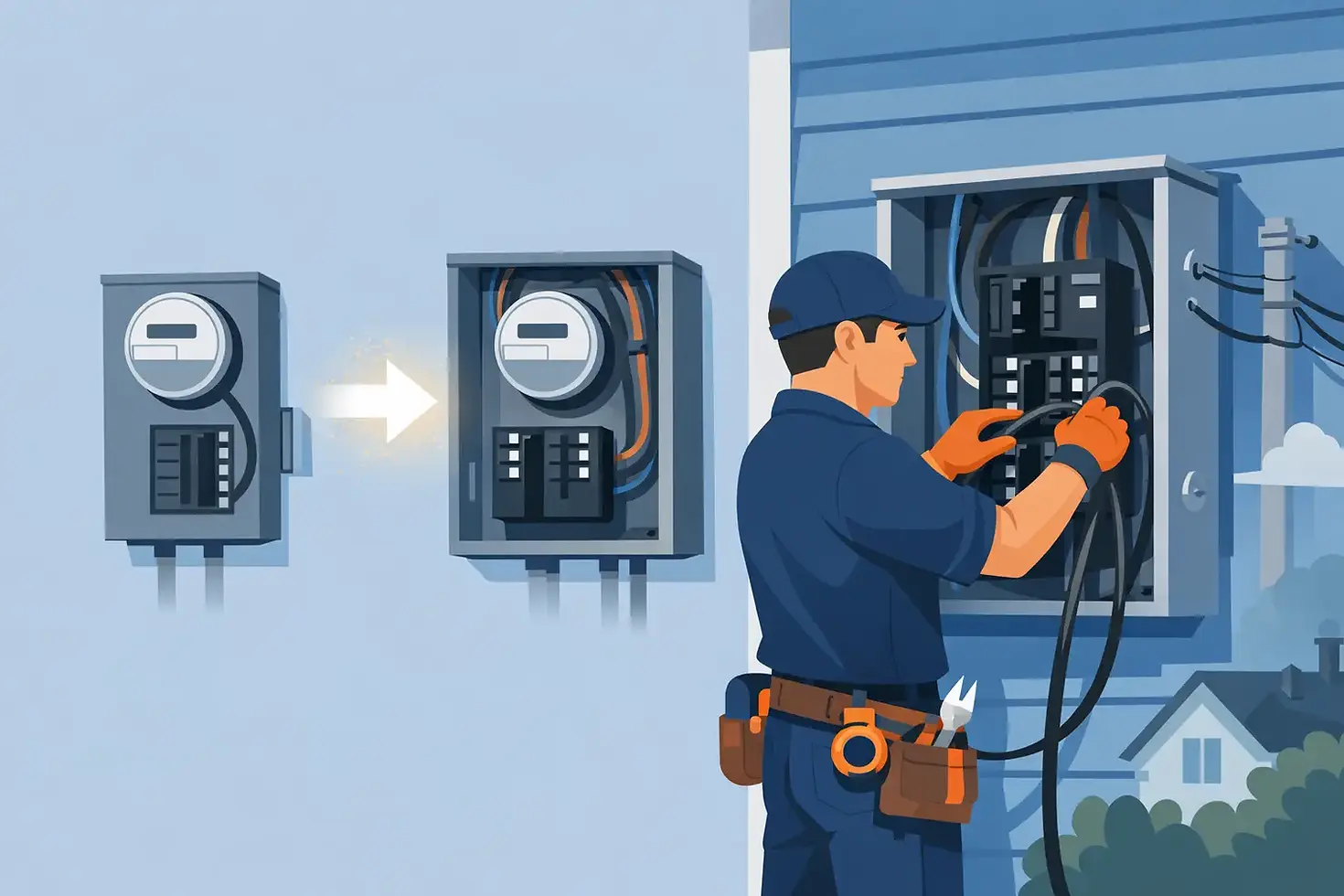
Service Upgrade 60 Amp 100 Amp Explained
If your lights dim when the microwave starts, or a breaker trips every time you run a space heater and the toaster together, a service upgrade 60 amp 100 amp may be more than a nice-to-have. In many older homes, 60 amp service was built for a much lighter electrical load than most families use now. Once you add newer appliances, basement development, air conditioning, or even a small workshop, that older service can start showing its limits fast.
For homeowners, landlords, and property managers, this is not just about convenience. It is about safety, reliability, and making sure the electrical system can support how the property is actually being used. A 60 amp setup is often workable for a small, older home with very modest demand. A 100 amp service gives you more room to operate without pushing the system to the edge every day.
What a service upgrade 60 amp 100 amp actually means
When people talk about upgrading from 60 amp to 100 amp service, they are usually talking about more than changing one part. The electrical service is the full path that brings power into the building and distributes it through the panel. In many cases, that means the meter base, service mast or conductors, main disconnect, panel, grounding, and bonding may all need to be reviewed.
That matters because an upgrade should not be treated like a quick swap. If part of the system is undersized, outdated, or no longer code-compliant, it can affect the whole job. A licensed electrician will look at the complete setup and determine what needs to change so the service is safe and properly rated.
In practical terms, moving to 100 amp service means your home has a greater capacity to handle electrical demand. It does not mean your hydro bill automatically goes up. You only pay for the power you use. The upgrade simply gives your system the ability to supply more current when your home needs it.
Why older 60 amp service becomes a problem
A lot of older homes were built in a time when electrical use looked very different. There may have been fewer receptacles, fewer kitchen circuits, no dishwasher, no microwave, no central air, and certainly no EV charger. Even if the original 60 amp service met the needs of the house decades ago, it may not be realistic now.
The first warning sign is often nuisance tripping. Breakers or fuses trip because the system is being asked to carry more than it was designed for. Sometimes the signs are subtler. Lights flicker under load. Certain circuits feel warm. You avoid using two major appliances at once because you already know what will happen.
There is also the issue of insurance, resale, and renovation planning. Older service equipment can raise concerns during inspections or when major upgrades are being planned. If you are renovating a kitchen, finishing a basement, adding laundry equipment, or replacing fuel-burning appliances with electric models, a 60 amp service may not leave enough capacity.
Is 100 amp enough for every property?
Not always. That is where good advice matters.
For many smaller or mid-sized homes, a 100 amp service is a solid improvement and may be fully appropriate. It can support modern day-to-day living much better than 60 amp service, especially when the wiring and panel are updated as part of the work. If the home does not have heavy electric heating loads or other high-demand equipment, 100 amp can be a practical fit.
But some properties should go beyond that. If the home uses electric baseboard heat, has a hot tub, central air, an electric range, a secondary suite, or future plans for EV charging, 200 amp service may be the smarter long-term move. Upgrading twice is rarely the most cost-effective path.
That is why load calculation matters. The right answer depends on the size of the property, the type of equipment installed, and what you plan to add later. A dependable electrician will not push a one-size-fits-all answer. They will look at current demand and likely future needs before recommending the service size.
What changes during the upgrade
A proper service upgrade starts with an assessment. The electrician checks the existing panel, service entrance equipment, grounding system, and the condition of the branch circuits. In some homes, the panel itself is the main concern. In others, the utility connection, meter base, or grounding needs attention too.
Once the scope is clear, permits and utility coordination are typically part of the process. Power often needs to be disconnected so the old service can be removed and the new one installed safely. This is one reason homeowners should avoid patchwork solutions or unlicensed work. Service upgrades need to be done correctly, inspected properly, and aligned with applicable electrical code.
The panel may also change in a way that helps day-to-day use. A newer 100 amp panel usually gives better circuit organization and room for dedicated breakers where they are needed. That can be especially helpful in kitchens, laundry areas, garages, and renovated spaces where electrical demand is concentrated.
Cost, downtime, and what affects the price
One of the first questions people ask is cost, and the honest answer is that it depends on the property. A straightforward service upgrade in an accessible older home is different from one involving mast replacement, limited access, damaged wiring, or major code corrections.
The final price is usually shaped by the condition of the existing equipment, panel location, utility requirements, permit needs, grounding upgrades, and whether any branch circuit repairs are needed at the same time. If you are already planning renovations, bundling the service work with other electrical updates can sometimes make sense.
Downtime is usually manageable, but there will be a period when power is off. A well-organized contractor will explain the timing clearly, coordinate with the utility, and work to keep disruption as short as possible. For occupied homes and active commercial spaces, that planning matters.
Safety is the real reason to stop putting it off
Many people wait until a failure forces the issue. That is understandable, but not ideal.
Electrical service problems rarely get better on their own. If the system is overloaded, outdated, or showing signs of wear, continuing to push it can increase the risk of overheating, equipment damage, and unreliable power. Even when there is no immediate emergency, an undersized service can put stress on the panel and circuits over time.
For landlords and property managers, this goes beyond repair calls. It affects tenant comfort, risk management, and confidence in the building. For homeowners, it affects everyday use and peace of mind. If you are constantly working around the limits of the electrical system, that is usually a sign the setup is no longer serving the property well.
When to call an electrician about a 60 amp to 100 amp upgrade
A few situations should move this conversation up your list. If your home still has fuse-based service, if breakers trip under normal use, if you are planning a renovation, or if you are adding larger appliances, it is worth having the service evaluated. The same goes for older homes being purchased or refinanced where the electrical system may affect insurance or inspection outcomes.
In Edmonton and surrounding communities, older housing stock often comes with older electrical infrastructure. That does not automatically mean the system is unsafe, but it does mean assumptions can be risky. A proper assessment gives you a clear picture of what you have, what it can handle, and whether 100 amp service is enough for your plans.
Stud Electric Inc approaches this the way it should be handled - with a full review, clear communication, code-compliant work, and a focus on getting the property safely ready for real-world use.
The best upgrade is the one that fits the next ten years
A service upgrade is not just about solving today’s breaker problem. It is about making sure your property can support how you live or operate now, and how that may change over time. Going from 60 amp to 100 amp can be the right move for many homes, but only if it truly matches the load and leaves enough room for what comes next.
If your electrical system feels like it is always one appliance away from trouble, that is a good reason to stop guessing and get it checked. A careful upgrade now can save frustration, reduce risk, and give you a setup you do not have to think about every day.


Comments